


HeyParty - Chat room & Live
4.161.00 Reviews
App Specs
- Version
- 1.0.36
- Updated On
- License
- Free
- Downloads
- 100,000+
- Developer
- Mevla Team
- Categories
- Social
- Platform
- Android
Screenshots
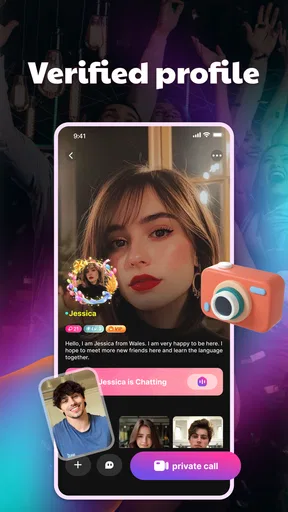
 Analysis by AppCompare
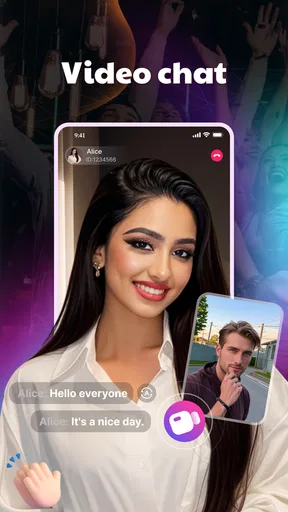
I approached HeyParty - Chat room & Live as a social app for spontaneous conversations rather than as a replacement for a carefully managed messaging service. Its central idea is simple: online video chat with strangers, with the appeal coming from the unpredictability of meeting someone new. In my experience, that makes it more interesting than another feed of familiar posts, but also more demanding. You need patience, sensible boundaries, and a willingness to leave conversations that feel uncomfortable.
The app is developed by Mevla Team and sits in the social category. It is free to install, although purchases range from $2.99 to $99.99 per item. That distinction matters because the basic download is easy to try, while frequent use may encourage spending depending on how the app presents its paid options. I would not treat it like a completely cost-free social tool without first checking what is available during actual use.
My overall view is cautiously positive: HeyParty is most convincing when you want quick, low-commitment video interaction with people outside your normal circle. It is less suitable if your priority is a quiet, private, predictable way to keep in touch with friends. The mature age classification also deserves attention before anyone installs it, particularly households deciding which social apps are appropriate for younger users.
How the live conversation experience feels
The strongest part of the concept is its immediacy. Traditional social networks ask you to build a profile, follow accounts, wait for replies, and gradually shape a feed. HeyParty points in the opposite direction. The purpose is to move toward a live exchange with a stranger, so the value is concentrated in the moment rather than in a long-term archive of posts.
That can be refreshing after spending too much time scrolling. A short conversation has a different rhythm from reacting to images or leaving comments. You have to listen, respond, and decide quickly whether the interaction is worth continuing. I found that this makes the app feel more active than ordinary social browsing, even when a particular conversation goes nowhere.
It is also a useful option for people who enjoy meeting others beyond their existing social group. Someone working remotely, living in a new place, or simply tired of seeing the same online circles may appreciate the chance to encounter unfamiliar perspectives. The experience is not automatically meaningful, but it creates opportunities that a conventional friends-only messenger cannot provide.
At the same time, the stranger-chat format sets expectations that should be clear from the start. You are not opening a carefully moderated group discussion with people you already trust. You are entering a setting where personalities, intentions, communication styles, and levels of politeness can vary sharply. The app’s appeal and its main risk come from the same source: the other person is unknown.
Worth Reading Before You Choose

EA SPORTS FC Mobile 26 Is a Bigger Football Game, but It Takes Time

Flipboard Shows What News Apps Must Do Beyond the Feed

Switching to Android Auto Means Rethinking Your Driving Routine

Google Calendar Makes a Crowded Week Easier to Manage

Ludo King Makes the Most of the Minutes Between Plans

Baby Panda World Brings Quick Play to Modern Phones, but Its Game Library Feels Busy
A realistic everyday use case
Imagine finishing work earlier than expected on a weekday evening. Your friends are busy, you do not want to commit to a full event, and ordinary social feeds are not holding your attention. A brief session here can fill that gap. You might have a pleasant exchange, discover a different viewpoint, or end the conversation after a few seconds because the match is not a good fit.
That scenario shows where the app makes sense. It is a lightweight social activity, not a promise of friendship every time you open it. I would use it when I had the energy for unpredictable interaction, not when I wanted comfort, privacy, or a guaranteed productive conversation.
A practical habit helps: decide before starting how much time and personal information you are willing to give. The open-ended nature of live chat can make a short visit stretch longer than intended. Having a clear stopping point also makes it easier to leave a conversation without feeling that you owe the other person more attention.
What stands out compared with familiar alternatives
Compared with messaging apps such as the ones people use to contact friends and family, HeyParty removes the need for an existing relationship. That is its clearest difference. A normal messenger is better for reliability, private coordination, and conversations you expect to continue. This app is better suited to discovery and instant contact.
Compared with large social networks, the experience is more direct and less dependent on a public feed. You are not mainly waiting for content to appear or trying to attract reactions from followers. The focus is closer to a live introduction. That can feel more human, but it also gives you less control over the tone of each interaction.
Compared with text-only random chat services, video adds useful context but raises the stakes. Facial expressions and voice can make a conversation warmer and easier to understand, yet they also expose more of your surroundings and appearance. For that reason, I would choose a text-based alternative when I wanted maximum distance from strangers, and choose HeyParty only when I was comfortable with a more personal format.
People who want structured communities may also prefer a topic-based forum or a moderated group service. Those alternatives usually make it easier to find conversations about a shared interest. HeyParty’s strength is spontaneity, not subject-matter depth. If your goal is to learn a specific skill, solve a technical problem, or join a stable community, another category will probably serve you better.
The friction that matters most
The biggest weakness is not a missing convenience; it is the uneven quality that naturally comes with random live interaction. A good conversation can be engaging, but an uninteresting or inappropriate one can make the whole session feel wasteful. The app cannot make every stranger thoughtful, compatible, or respectful.
This means the user experience depends heavily on personal judgment. I would not open it while distracted, in a noisy public place, or when I was already tired and impatient. Video chat demands more attention than scrolling, and ending a conversation can feel more socially awkward than skipping a post. The format rewards users who are comfortable setting boundaries quickly.
Privacy is another meaningful consideration. I would keep the camera pointed at a neutral background, remove visible documents or personal items from view, and avoid mentioning my workplace, home address, daily route, or other details that could identify me. I would also assume that anything shown or said in a live interaction deserves caution. That is not a criticism unique to this app; it is a necessary rule for any service built around video contact with strangers.
The mature 17+ content rating reinforces that this is not an app I would hand to a child simply because installation is free. Parents should discuss the reason for the age classification and consider whether the open video format fits their household rules. A teenager who is allowed to use it still needs practical guidance about blocking, reporting, ending conversations, and refusing requests for personal information.
There is also a financial friction point. The app can be installed without an upfront charge, but in-app purchases cost between $2.99 and $99.99 per item. I would avoid tapping purchase options casually, especially during a long session when the desire to continue interacting might affect judgment. Checking device purchase controls before use is a sensible precaution for anyone sharing a phone or tablet.
Small habits that improve the experience
My first recommendation is to treat the opening moments of a chat as a screening period, not as a commitment. A polite greeting is enough. If the other person immediately pressures you, asks invasive questions, or makes the exchange unpleasant, leaving is the correct response. You do not need to explain yourself at length.
Second, use a deliberately neutral setting. A plain wall, moderate lighting, and headphones can make the conversation easier without revealing much about your private life. This is a more useful preparation step than trying to create an impressive background. The goal is control, not performance.
Third, keep the app separate from your expectations about friendship. Some strangers may be entertaining for a few minutes but not people you want to contact again. That is still a successful interaction if you enjoyed the moment. Expecting every chat to become a lasting connection will make the random format feel disappointing.
Finally, pay attention to how often you are offered paid options during normal use. Since the purchase range is broad, I would decide in advance whether I am willing to spend anything at all. If the answer is no, I would stay within the free experience and close the session rather than allowing curiosity to turn into an unplanned charge.
Who should try it, and who should skip it
I think the best audience is adults who genuinely enjoy spontaneous conversation and understand that inconsistency is part of the deal. It can suit outgoing users who want a quick social break, people exploring perspectives outside their usual circle, and anyone who prefers live interaction to passive scrolling. It may also appeal to users who do not want to build a polished public profile before speaking with someone.
It is a weaker choice for people who dislike being seen on camera, become uncomfortable when conversations turn unpredictable, or need strong topic filtering. It is also not my first recommendation for maintaining relationships. If I wanted to arrange dinner, share private news, or send a reliable message to someone I know, I would use a conventional messenger instead.
Users who are especially concerned about privacy should think carefully before installing. Even with sensible habits, live video exposes more than text. Anyone who cannot comfortably refuse questions or end a conversation should probably choose a more controlled social environment. The app’s free entry does not remove the personal cost of dealing with unwanted attention.
Device compatibility is relatively accessible: the app requires Android 6.0 or later. That makes it available to people using older Android hardware, although video chat still depends on the phone’s camera, microphone, connection quality, and battery condition. I would test it in a stable environment before judging the service based on one poor session in a weak-signal location.
The current version is 1.0.36, and the app was released on February 6, 2025. Those details place it in a relatively early stage compared with long-established social platforms. I would keep expectations realistic: a newer service may feel fresh, but it may also change its presentation or balance of free and paid elements as it develops. That is another reason to review purchase screens and privacy choices periodically rather than assuming the first setup will remain unchanged.
What the user numbers suggest without telling the whole story
HeyParty has passed 100K installs, with an average rating of 4.2 from around 493 ratings. That is enough activity to show that the idea has found an audience, but it is not a guarantee that every user will find equally good conversations. In a stranger-chat app, personal fit matters more than a store score because the quality of each session depends on who happens to be available and how you use the format.
There are around 60 written reviews, which can help a prospective user understand the general reaction while still leaving plenty of room for individual experiences to differ. I would read recent comments for clues about usability and the balance between free and paid use, then make a short trial rather than committing emotionally or financially from the start.
My final recommendation
After looking at the app as a complete social tool, I see a clear but limited purpose. HeyParty works best as a controlled dose of spontaneous video conversation. Its appeal is the possibility of meeting someone outside your routine without first joining a large community or building a network. That makes it more immediate than ordinary social feeds and more personal than random text chat.
Its limitations are equally clear. The experience can be uneven, video requires more privacy awareness, and the available purchases mean “free” should not be confused with an entirely cost-free habit. The mature age rating is important, not decorative, and anyone using the app should be ready to leave conversations that cross a line.
I would recommend giving it a careful try if you are 17 or older, comfortable with live video, and interested in brief interactions with strangers. Start with firm boundaries, a neutral background, and no assumption that you need to buy anything. If you want dependable contact, deep interest-based discussion, or a tightly controlled audience, I would choose a traditional messenger, forum, or moderated community instead.
In short, this is a focused social experiment rather than an all-purpose communication app. I like the directness, but I would use it selectively. With realistic expectations and good privacy habits, it can make a spare few minutes more social; without those habits, its unpredictability becomes the main reason to avoid it.
Pros
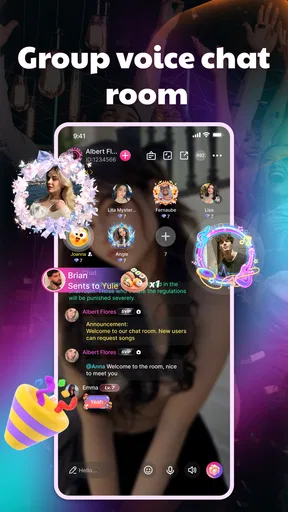
- Join themed chat rooms and meet people with similar interests.
- Live audio interactions feel more personal than standard text chats.
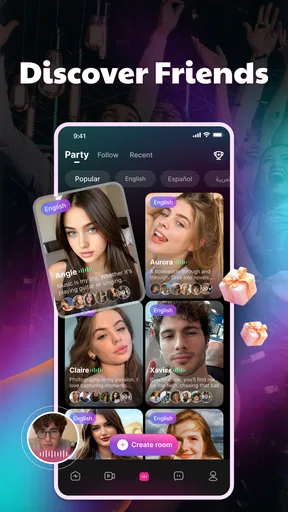
- Simple interface makes room discovery and participation easy.
- Interactive features help keep conversations lively and engaging.
- Useful for casual socializing without needing a large follower base.
Cons
- Room quality can vary widely depending on hosts and active participants.
- Busy live rooms may become noisy or difficult to follow.
- Some features or virtual items may require in-app purchases.
- Public conversations may expose users to unwanted messages or behavior.
- Reliable internet and microphone access are important for a smooth experience.
FAQs for HeyParty - Chat room & Live
What is HeyParty - Chat room & Live, and what can users do with it?
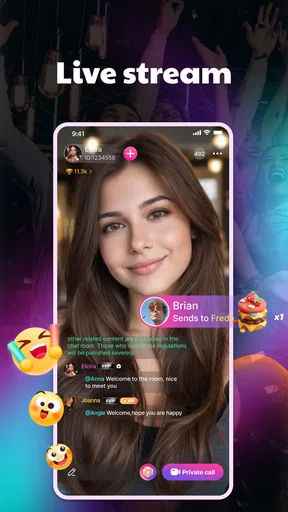
HeyParty - Chat room & Live is a social entertainment app focused on live chat rooms, voice conversations, and meeting people online. After creating a profile, users can browse available rooms, join ongoing discussions, communicate with other members, and sometimes participate in interactive activities or live events. The experience is designed for casual socializing, discovering new communities, and making connections through real-time conversations.
Does HeyParty require registration, and what information is needed to create an account?
Most of the app’s social features require users to register or sign in before joining rooms and interacting with other members. Depending on the available login options, registration may use an email address, phone number, or an existing social account. Users may also be asked to choose a nickname, upload a profile picture, and provide basic personal details. It is advisable to review the privacy settings before completing the profile.
Is HeyParty - Chat room & Live free to download and use?
HeyParty can generally be downloaded without an upfront charge, and users may access some chat rooms and social features for free. However, the app may include optional in-app purchases, virtual gifts, coins, premium privileges, or other paid features. Availability and pricing can vary by country and platform. Before buying anything, check the purchase confirmation screen and the account settings for subscription or payment information.
Is HeyParty safe for teenagers and younger users?
Because HeyParty is built around live communication with people online, users should be careful when sharing personal information or accepting messages from strangers. The app may offer reporting, blocking, moderation, and privacy controls, but these tools cannot eliminate every risk. Parents should check the current age rating, read the platform’s safety information, and supervise younger users. Never share passwords, addresses, financial details, or private images.
What should I do if I experience harassment, inappropriate content, or technical problems?
If another user behaves abusively, sends unwanted messages, or shares inappropriate material, use the available block and report functions immediately. Avoid continuing the conversation or revealing personal information. For login failures, audio problems, crashes, or missing purchases, first update the app, check your internet connection, and restart the device. If the problem continues, contact HeyParty’s support team through the in-app help section or the official store listing.


